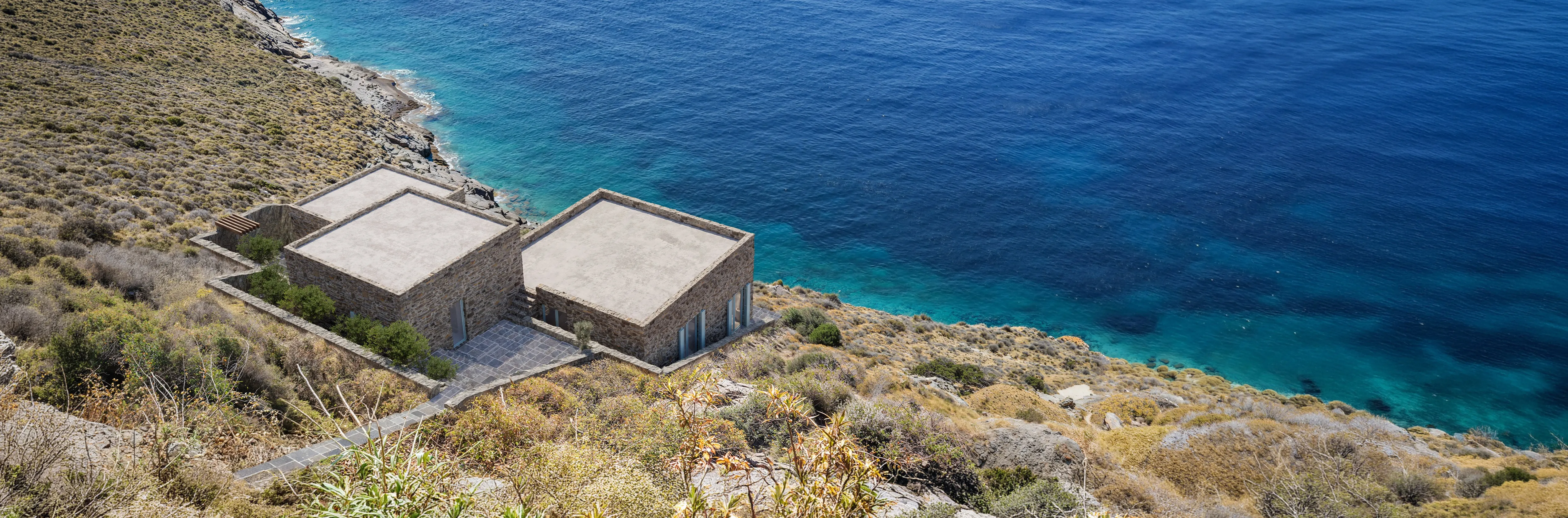
House in Kythnos
Sigurd Larsen Design & Architecture
Before the world was settled, the gods went to war with the last of the monsters.
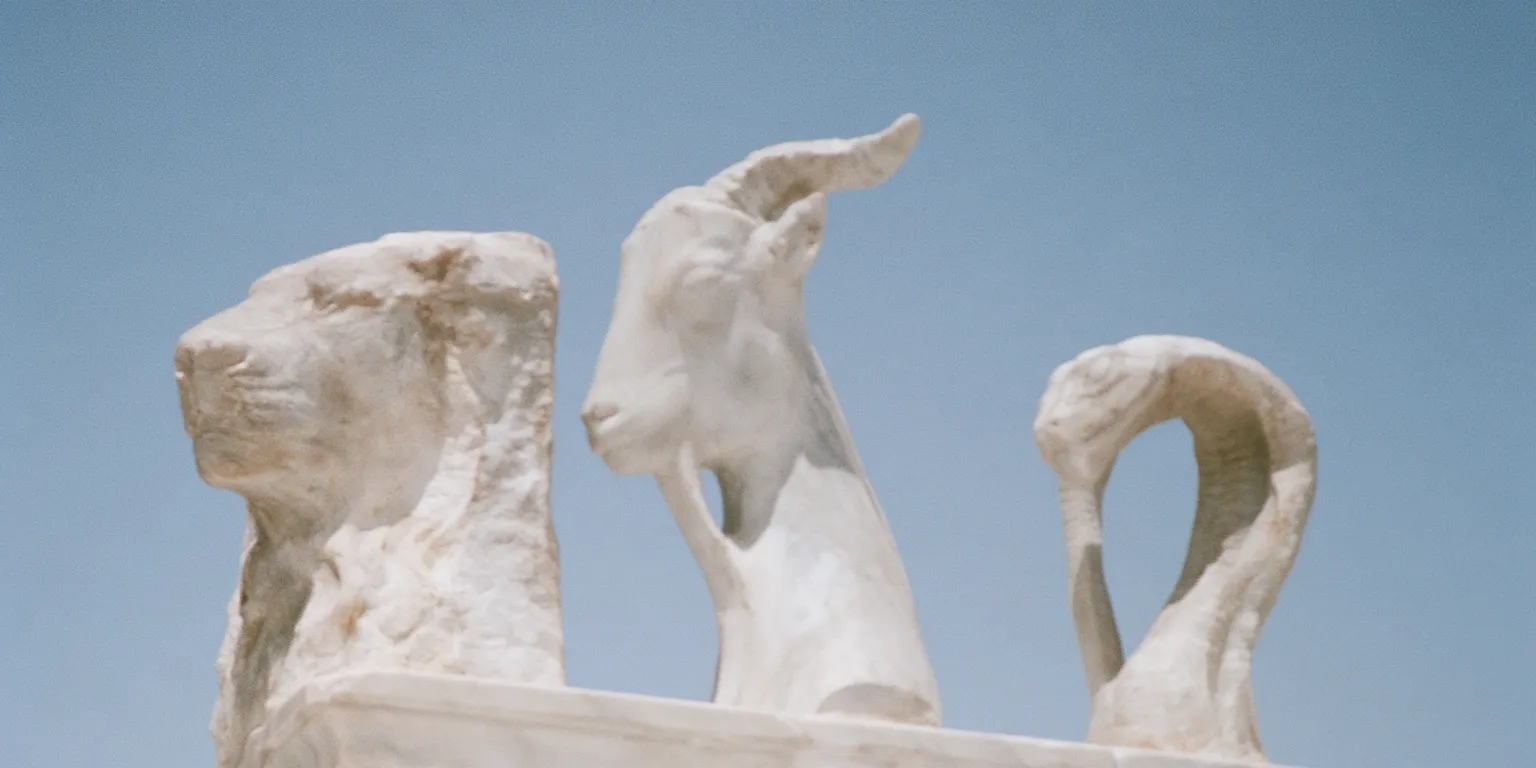
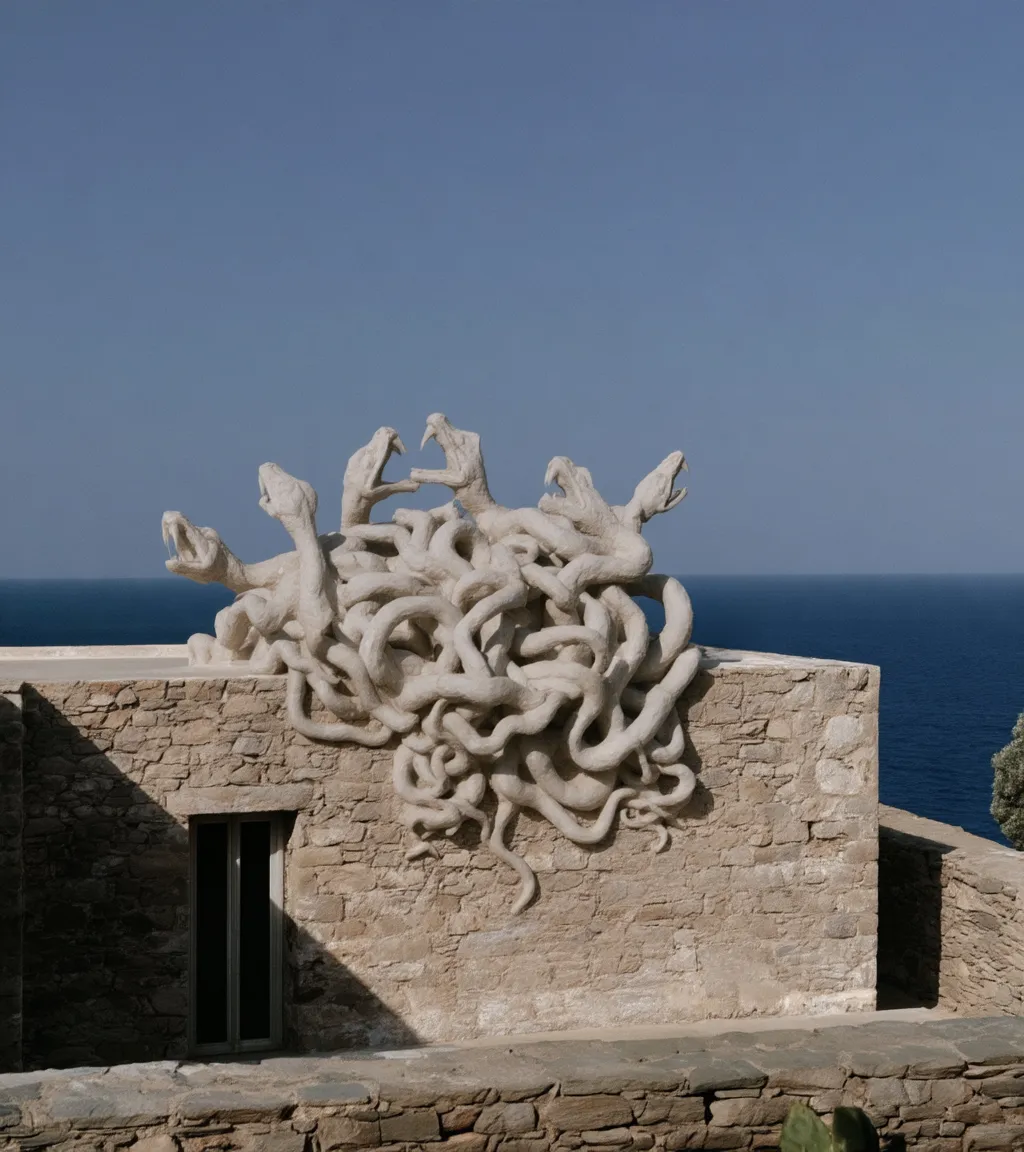
The greatest of them was Typhon. He rose from the earth with a hundred serpent heads, and for a time even Olympus fled before him. Zeus met him in the end. He struck him down with thunder and buried him beneath a mountain.
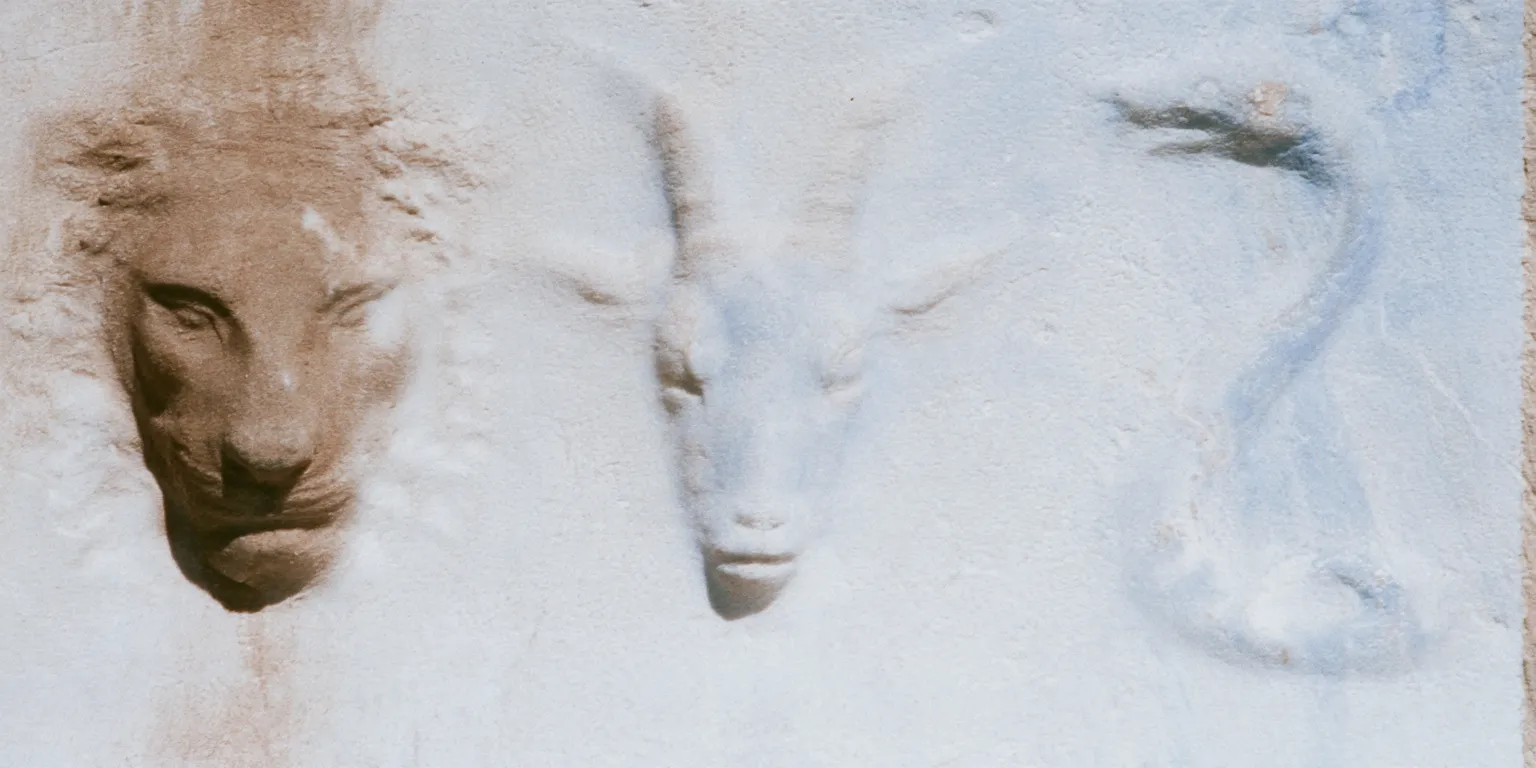
Typhon did not stand alone. Beside him was Echidna, mother of every monster the heroes would one day face.
“Half a nymph with glancing eyes and fair cheeks, and half again a huge snake.” Hesiod, Theogony
Zeus could have ended her too. He chose not to. He left her alive in her cave, so that heroes would always have something left to fight.
Our story begins here. Not with the god who won, but with the creature who was spared. This is the house that was allowed to live.
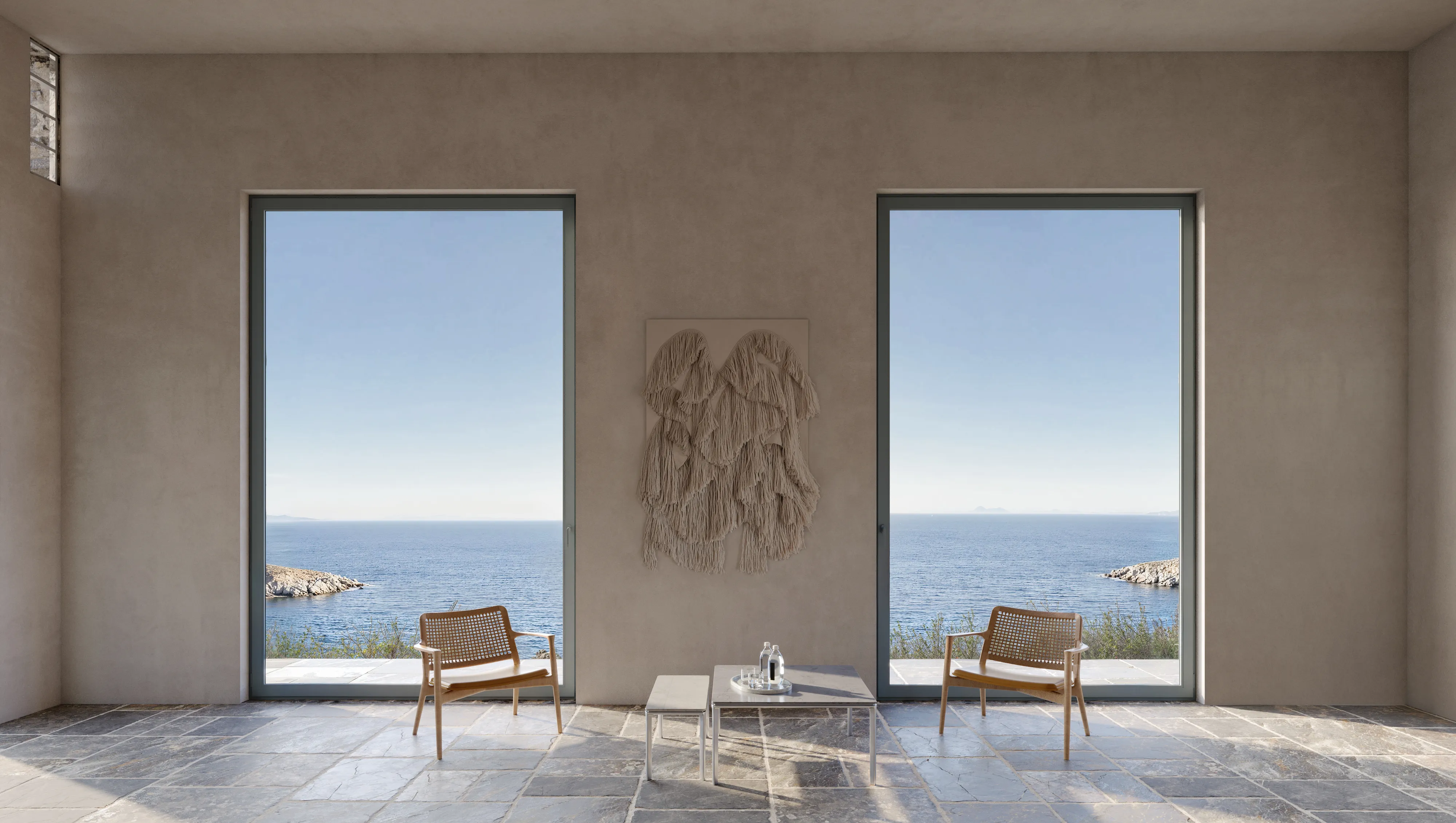
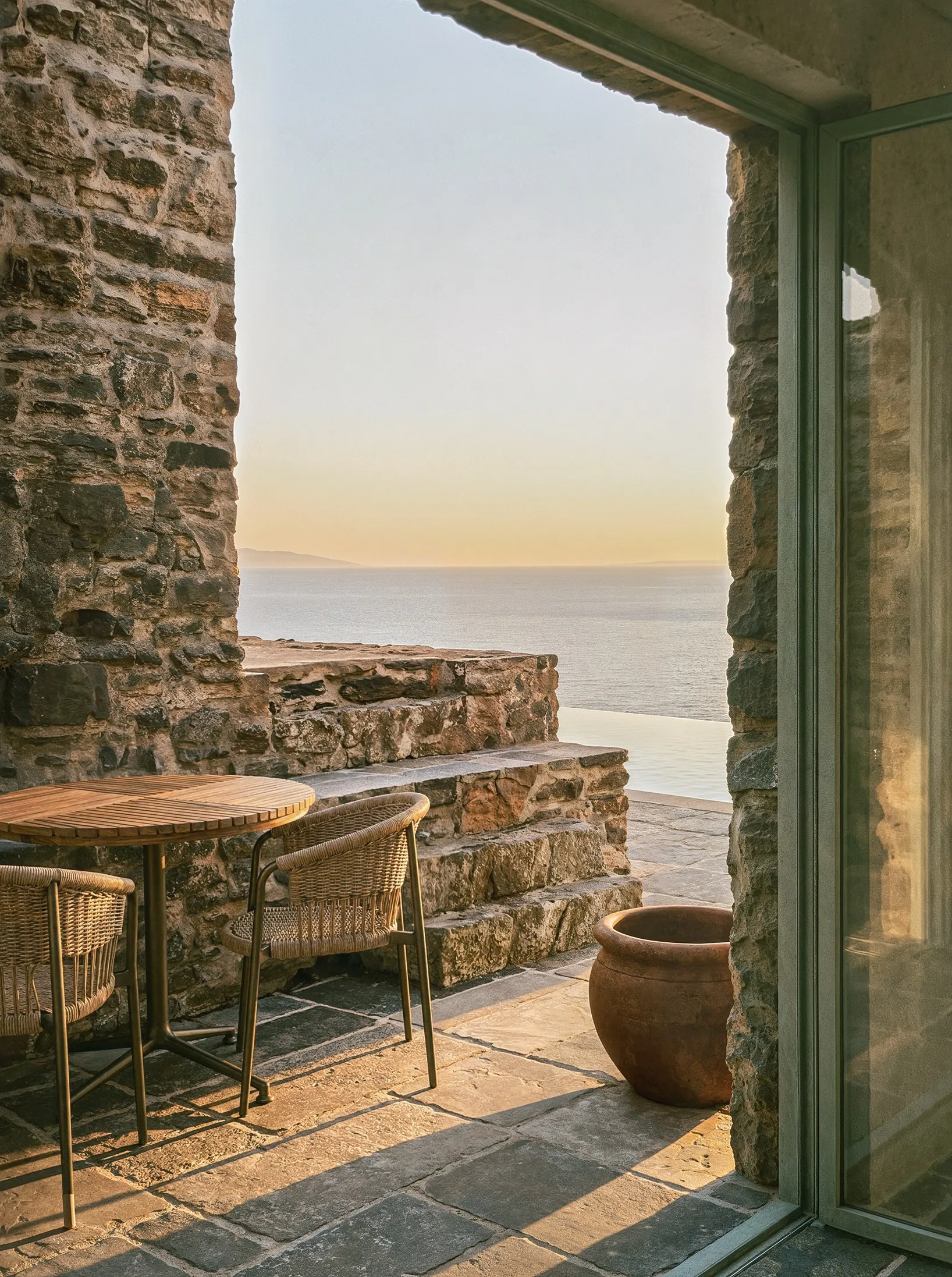
The daylight views carry only one half of the story. They show the house as it will be lived. Plaster walls warm in the afternoon. Dark flagstone runs from the living room to the terrace. A long sofa turns its back to the room and its face to the sea.
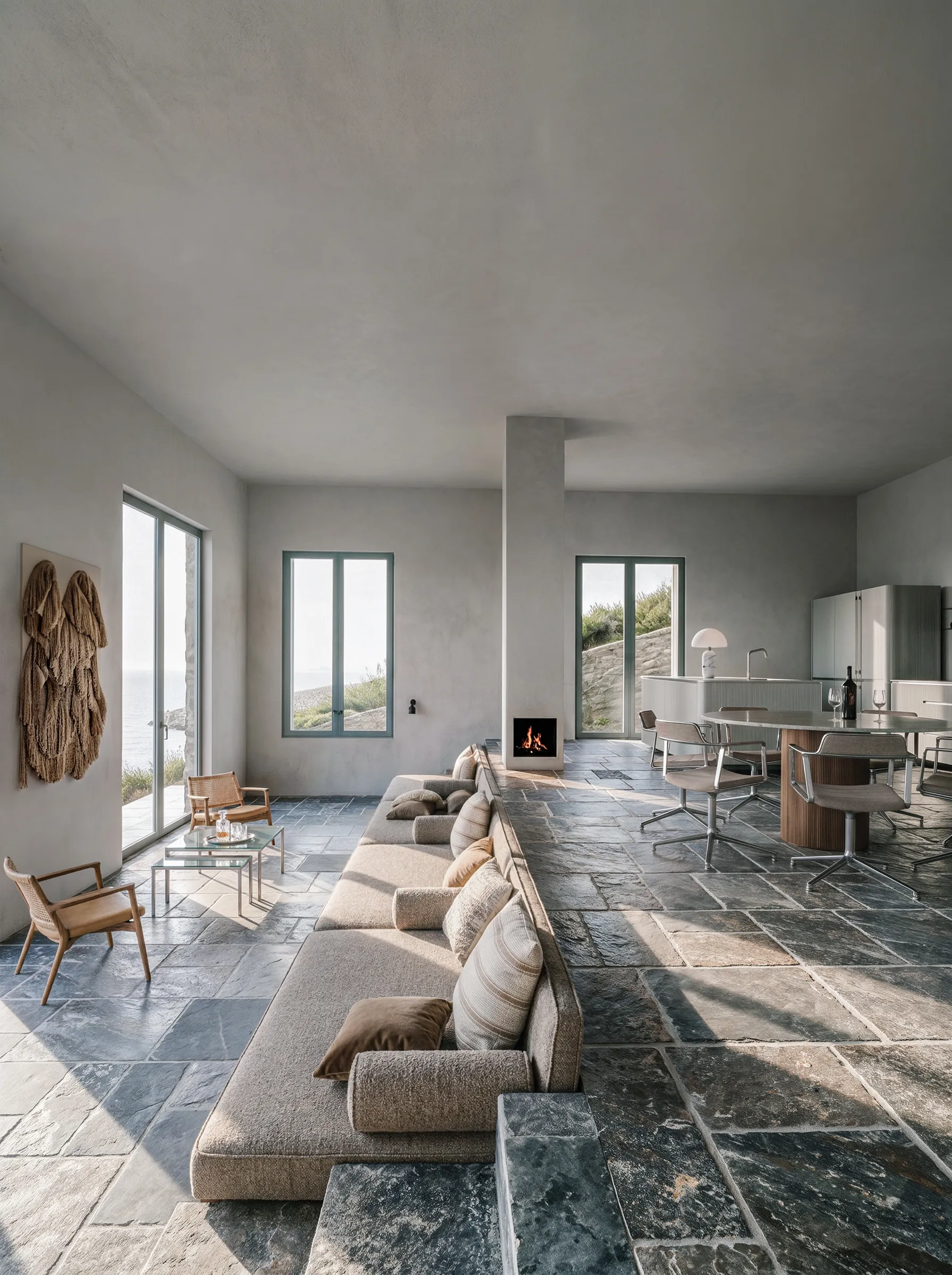
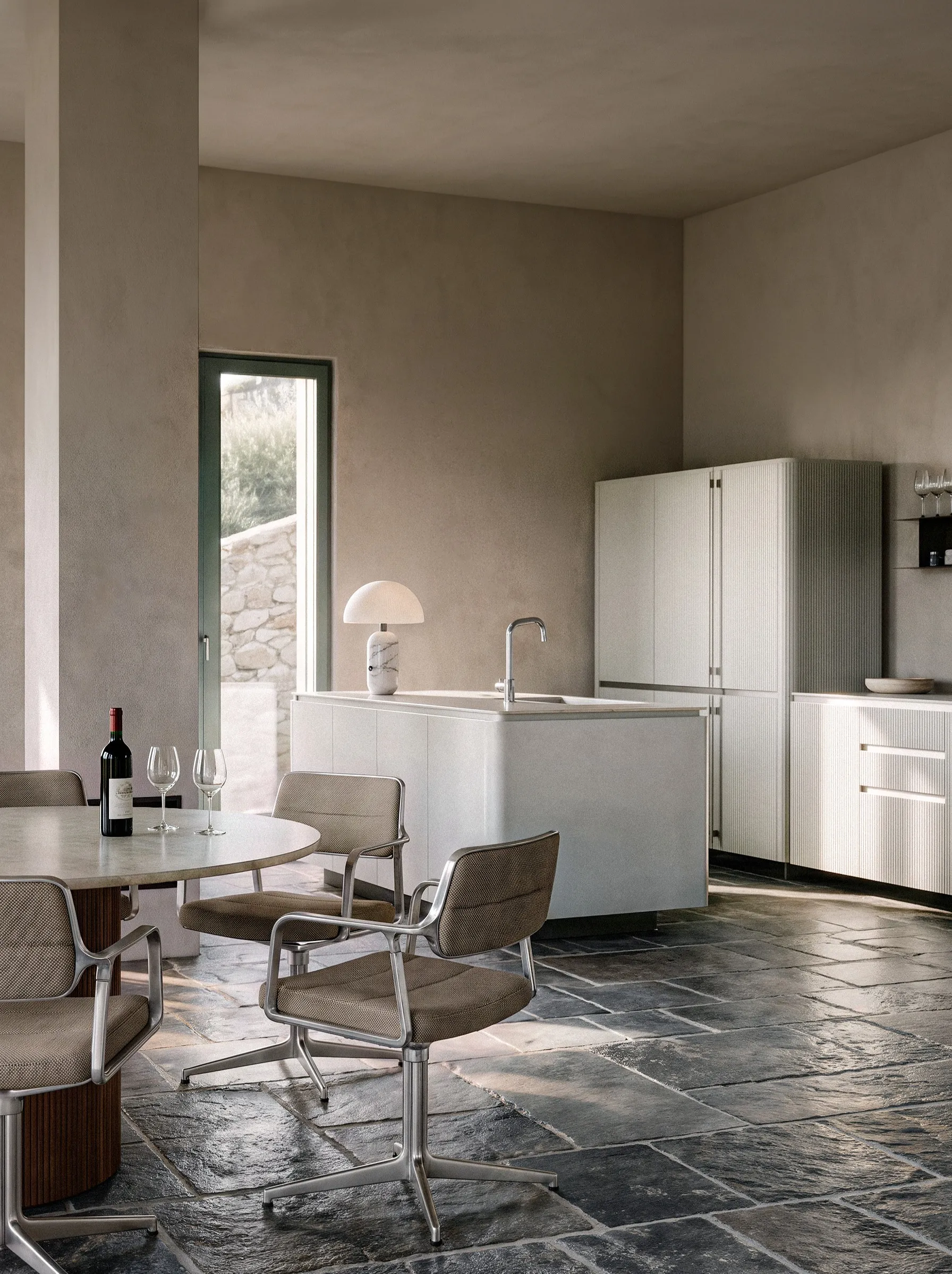
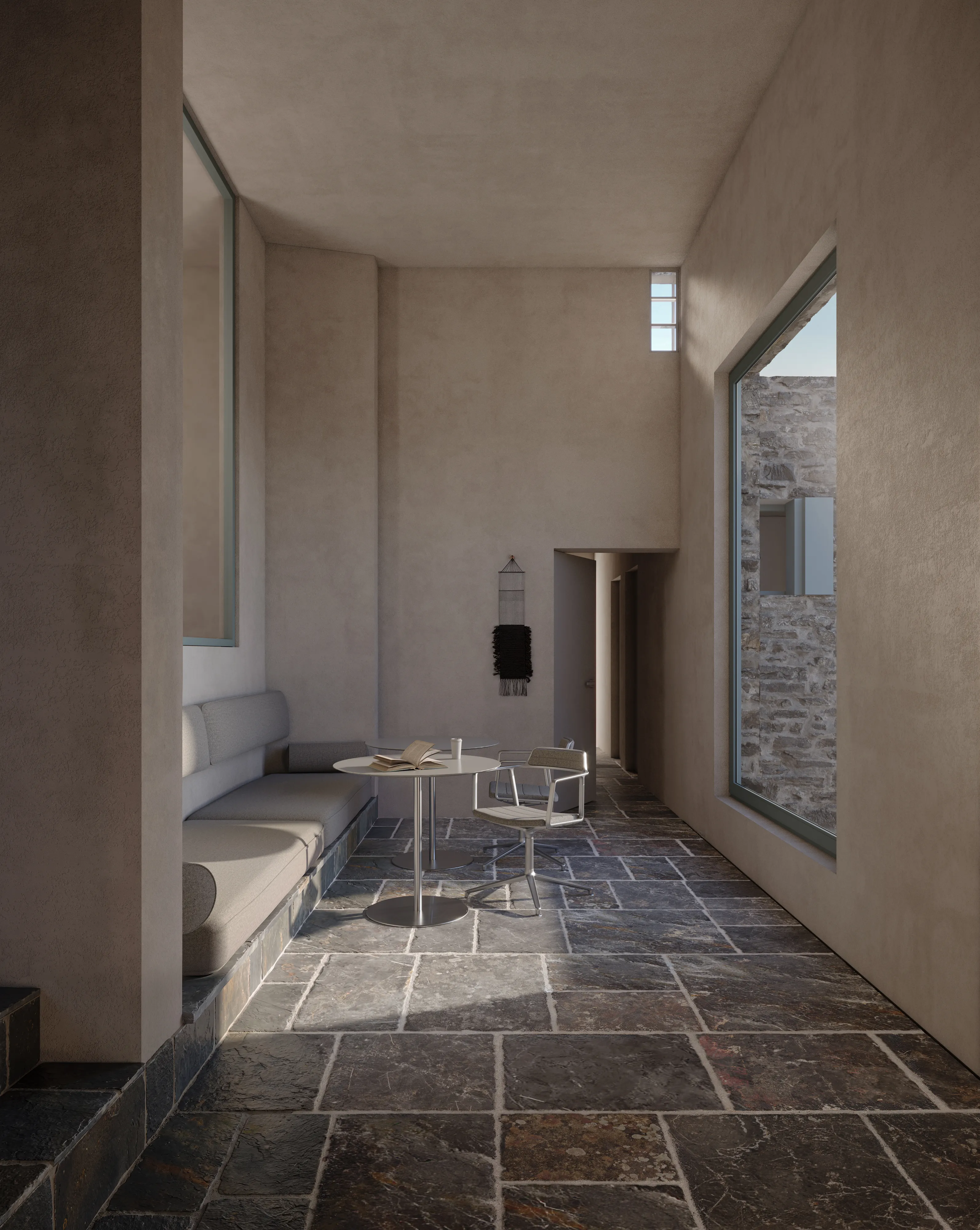
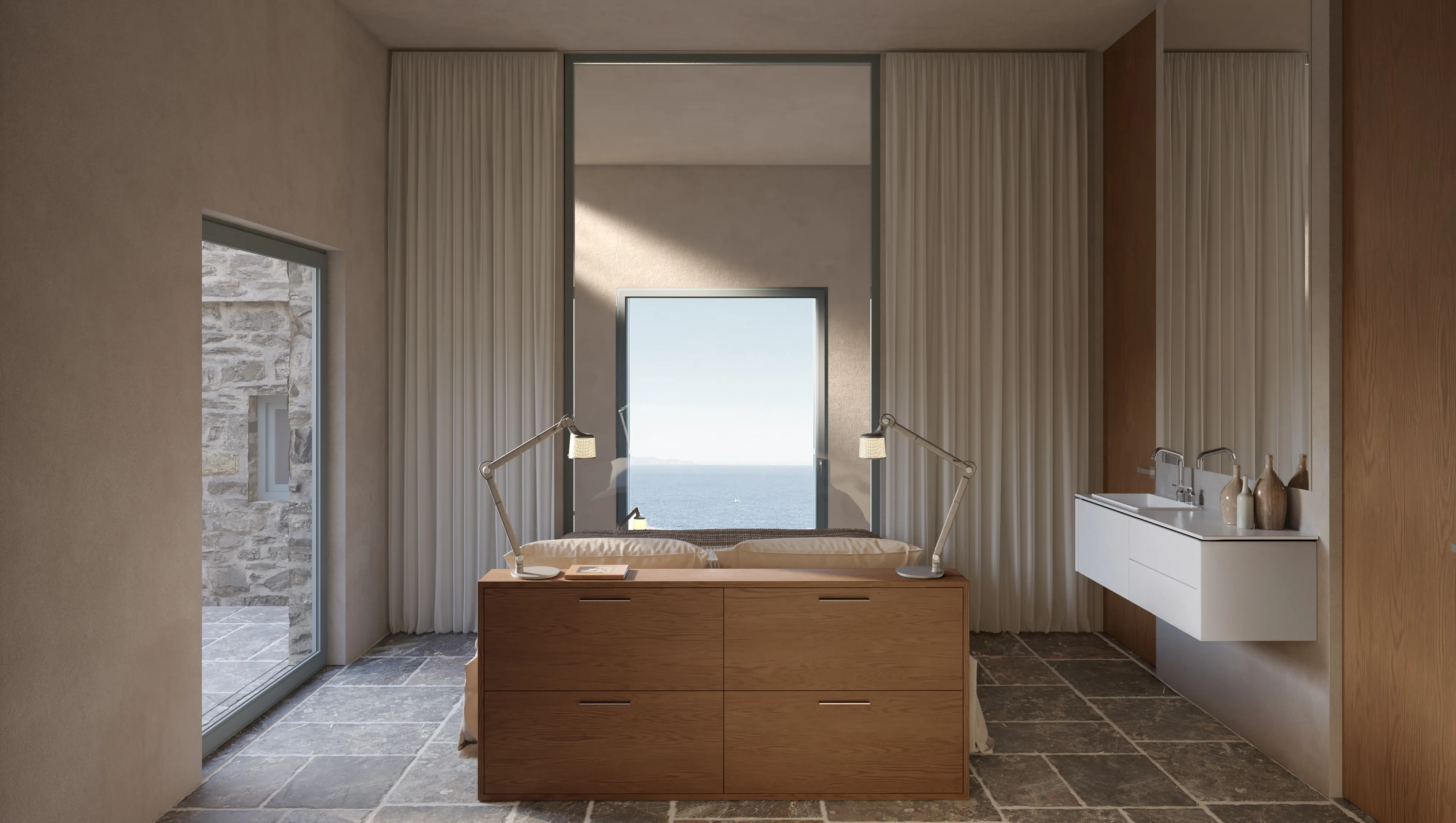
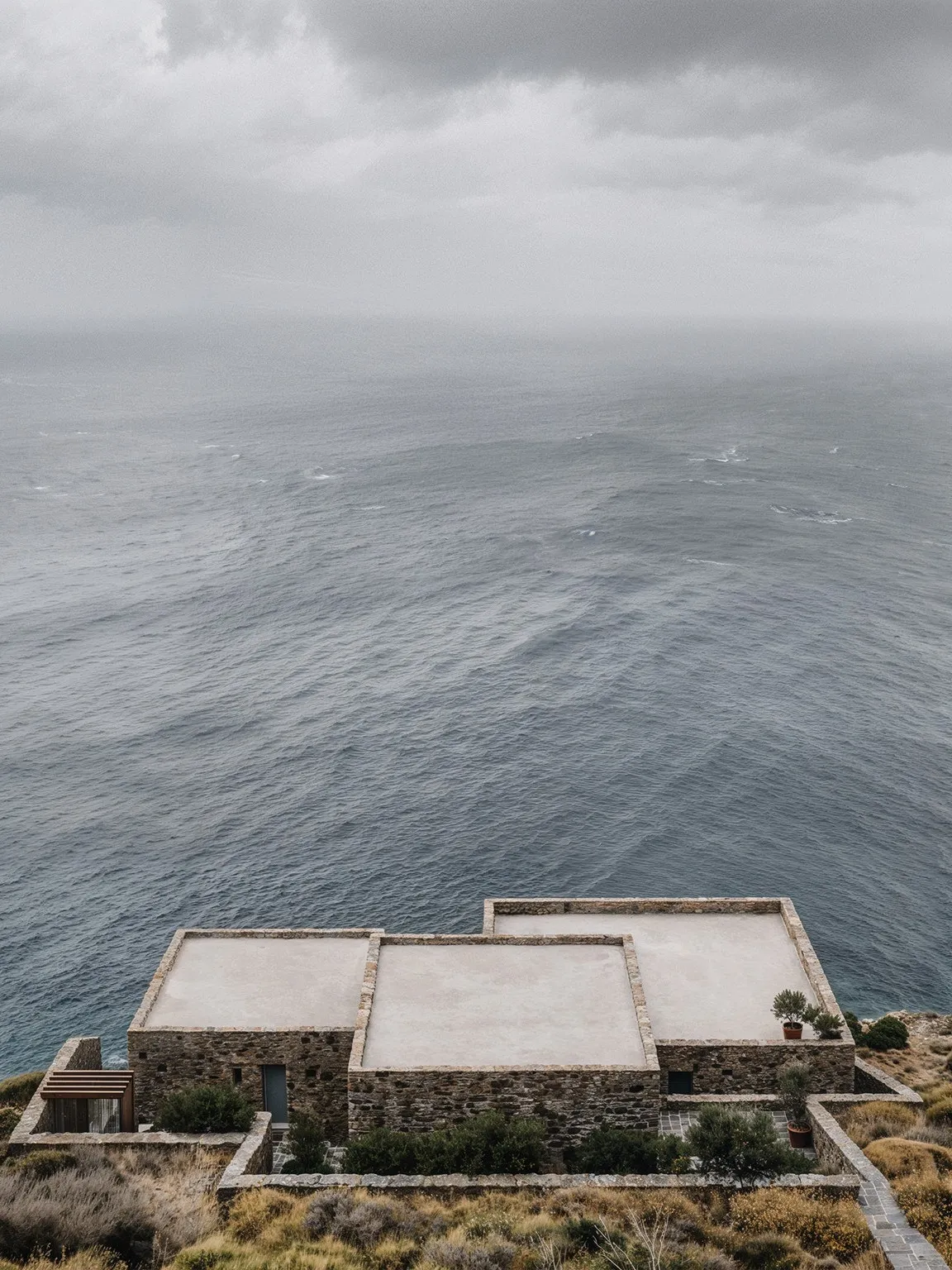
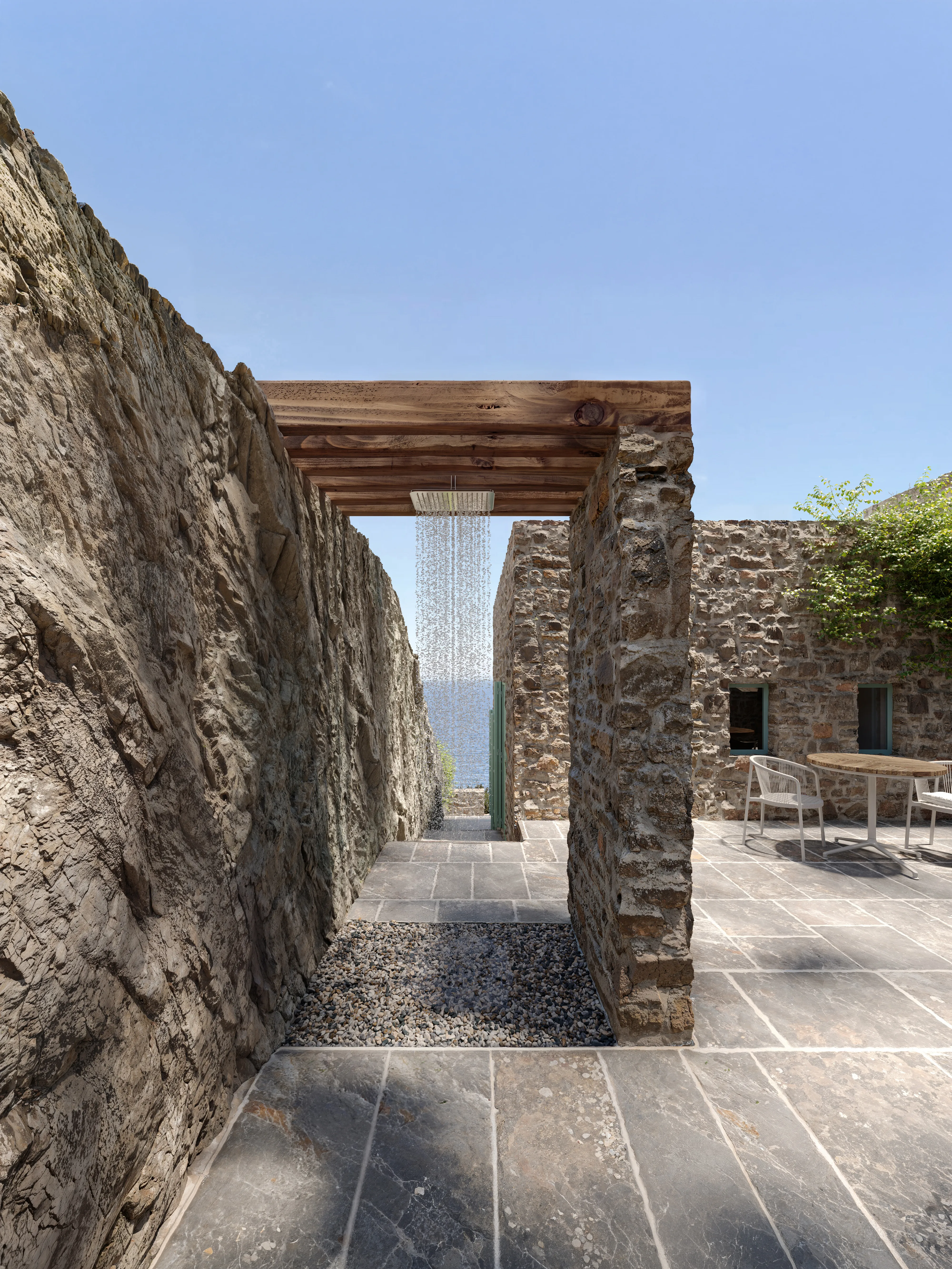
On a slope of thyme and rock above the Aegean, Sigurd Larsen’s villa lies low against the hill. Two volumes of local stone hold a courtyard between them. The sea never leaves the view. The house does not stand like a fortress. It shelters. Its walls are not armour. They are skin, wrapped around something alive.
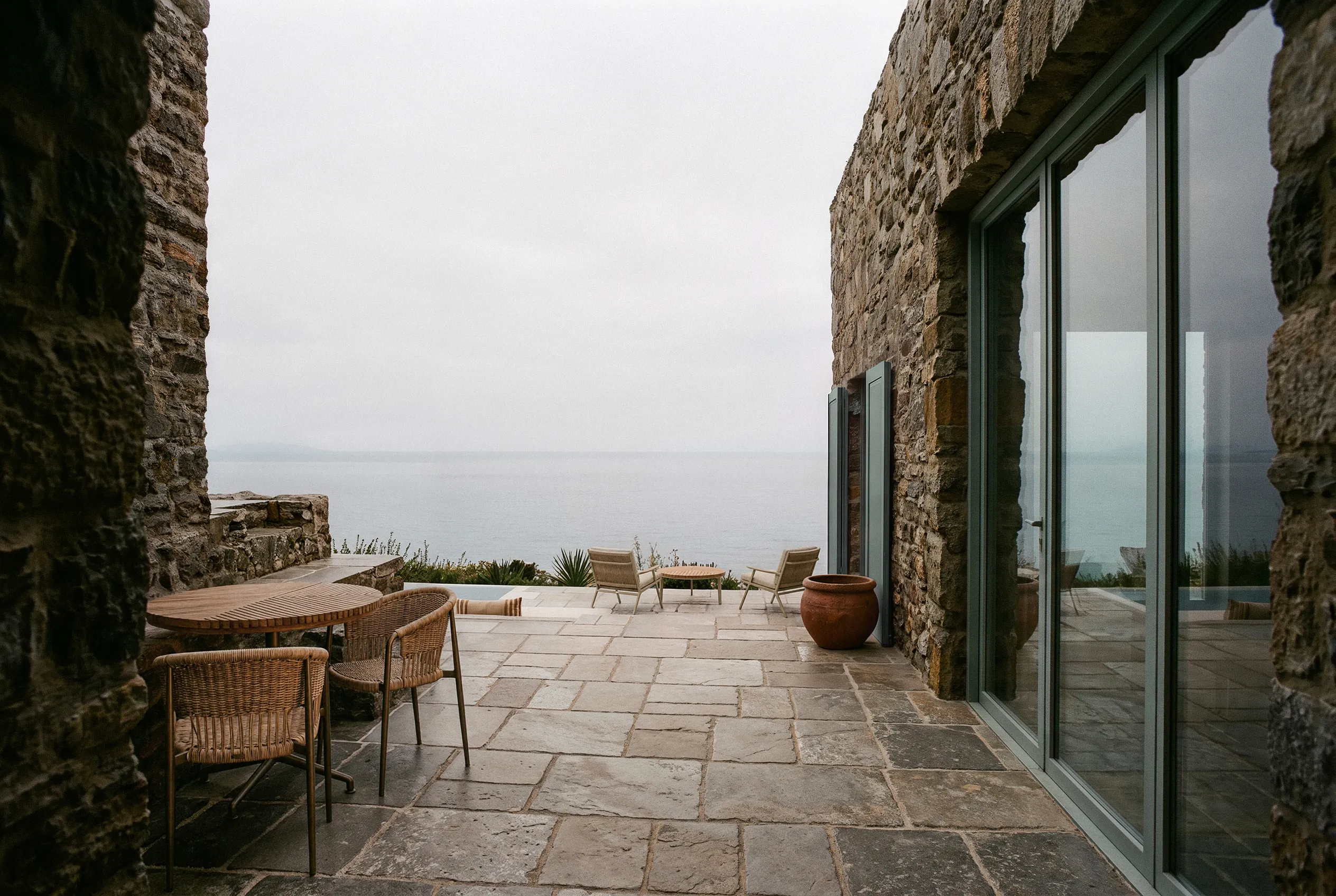
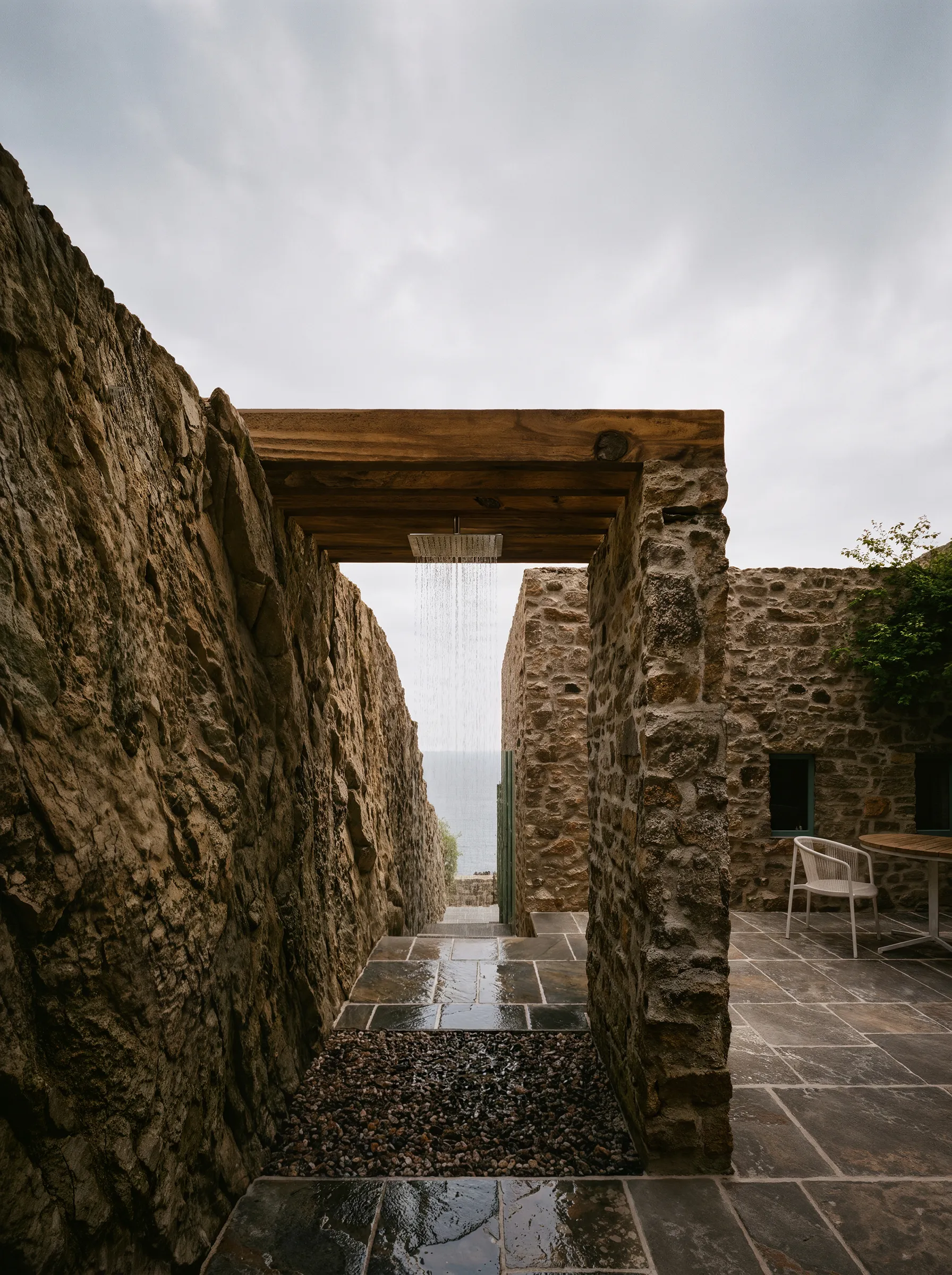
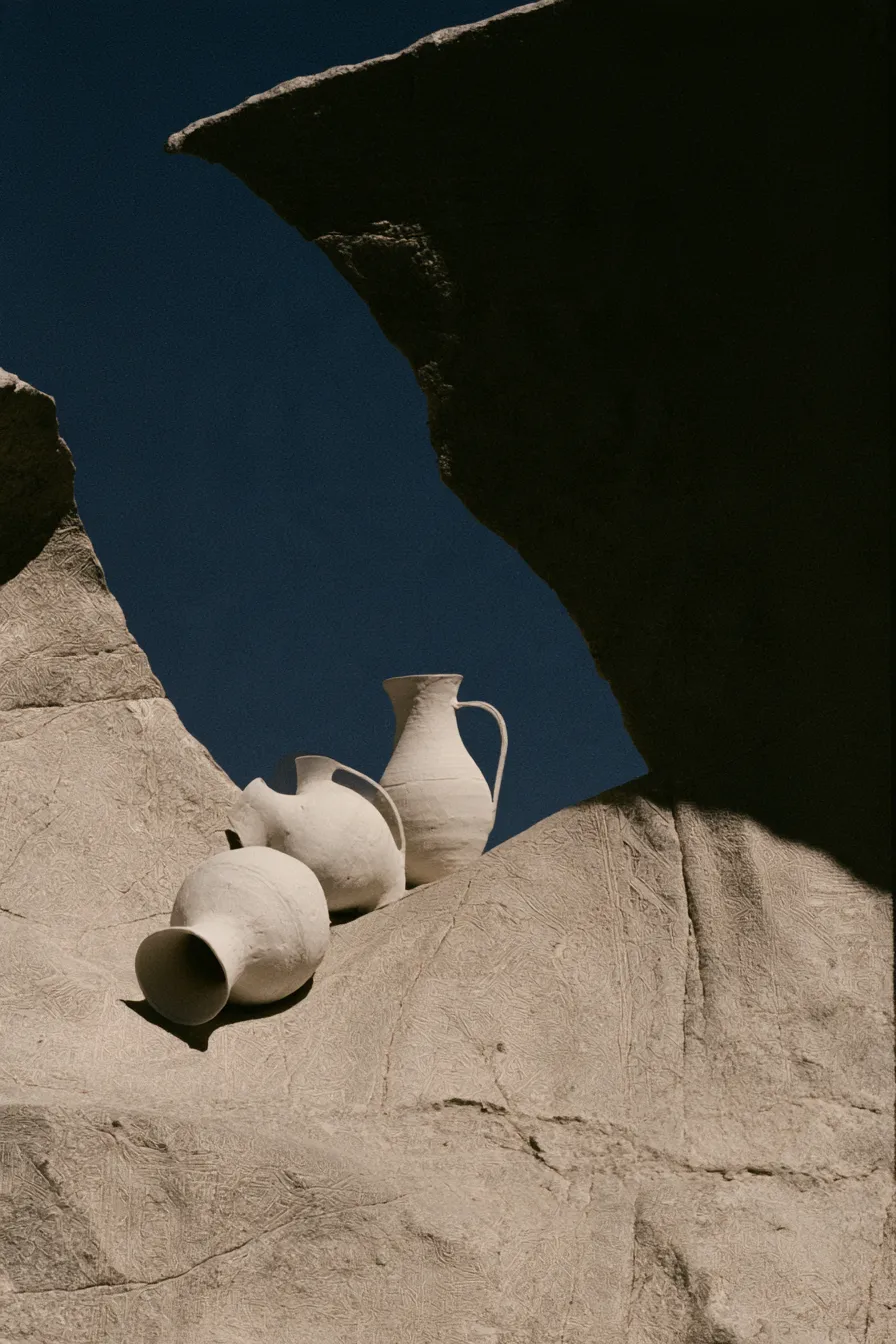
In our images, Typhon never appears as a monster. He is a shadow, a landform, the dark mass of the mountain behind the walls. He keeps the scale of geology. Against him, the house takes its true position. It stands between the person and the creature. That is what shelter means here.
This half of story is told in a narrow palette. Twilight, sea fog, a blue-grey sky. Bone white, black, sandy ochre. In these images there is no sun. Under cloud, the stone speaks without shadow doing the work. Light arrives soft and from everywhere. Nothing is dramatic. Everything is present.
The House in Kythnos is a refuge for those the gods forgot. A skin of stone, and something still breathing inside it.