Berlin
wolff:architekten + Sigurd Larsen Design & Architecture
In Germany the forest and the house have always been part of the same story. For centuries builders walked into the woods and came back with the frames of their homes, and the oak posts of Fachwerk that still hold up the old streets are trees that were felled and squared and stood upright again to carry a family instead of a canopy. It was here too that people first learned to think of the forest as something to be borrowed from rather than taken, when Hans Carl von Carlowitz wrote in 1713 that no more wood should leave a forest than it could grow back, and from that idea came the German word for sustainability.
Two centuries later among the pines beside a lake near Potsdam Konrad Wachsmann built a small timber house for Albert Einstein that stands so lightly between the trunks that it seems to have been allowed to stay there by the forest itself. Each of these moments asks the same quiet question that runs through this project, which is where the forest stops and where the house begins.
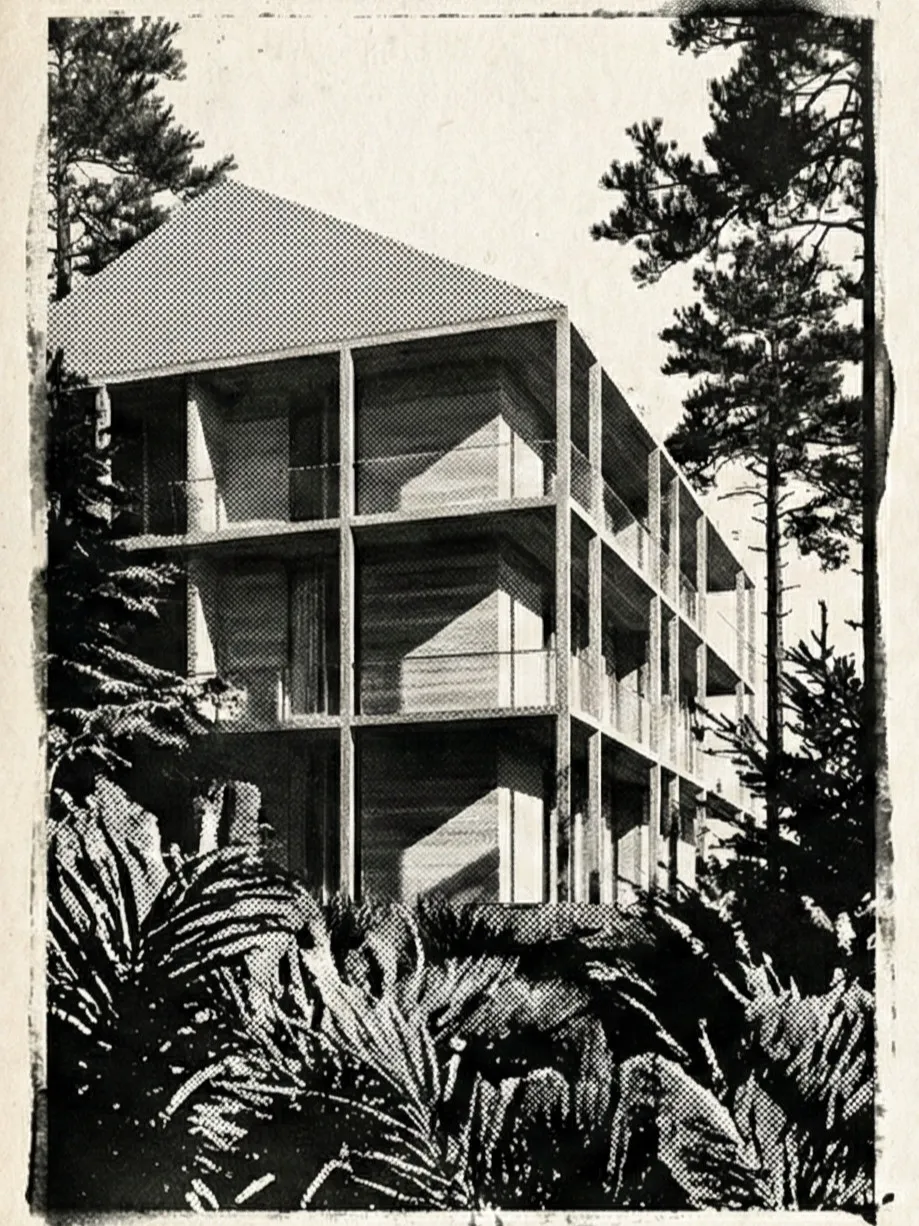
Two centuries later among the pines beside a lake near Potsdam Konrad Wachsmann built a small timber house for Albert Einstein that stands so lightly between the trunks that it seems to have been allowed to stay there by the forest itself. Each of these moments asks the same quiet question that runs through this project, which is where the forest stops and where the house begins.
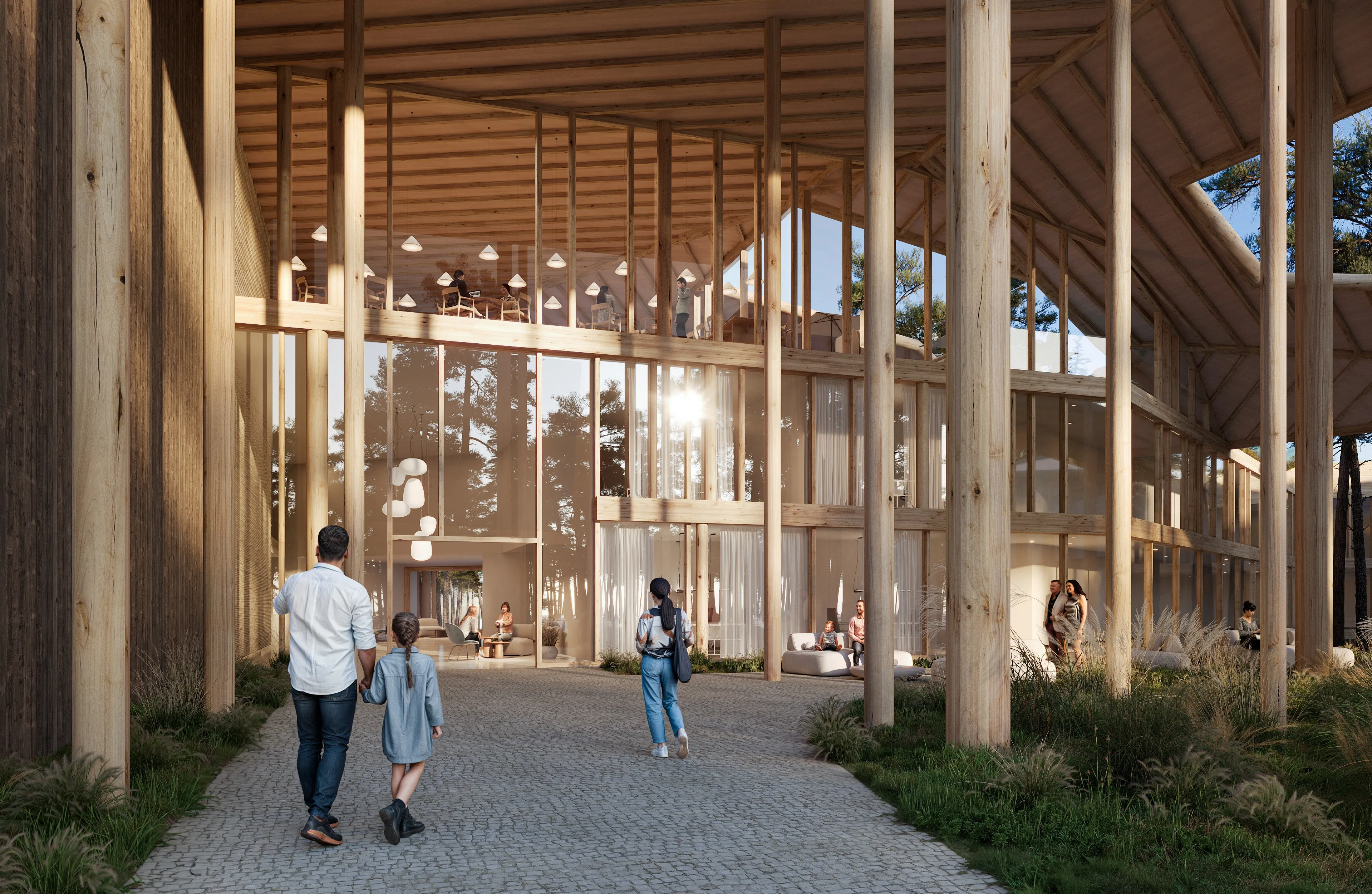
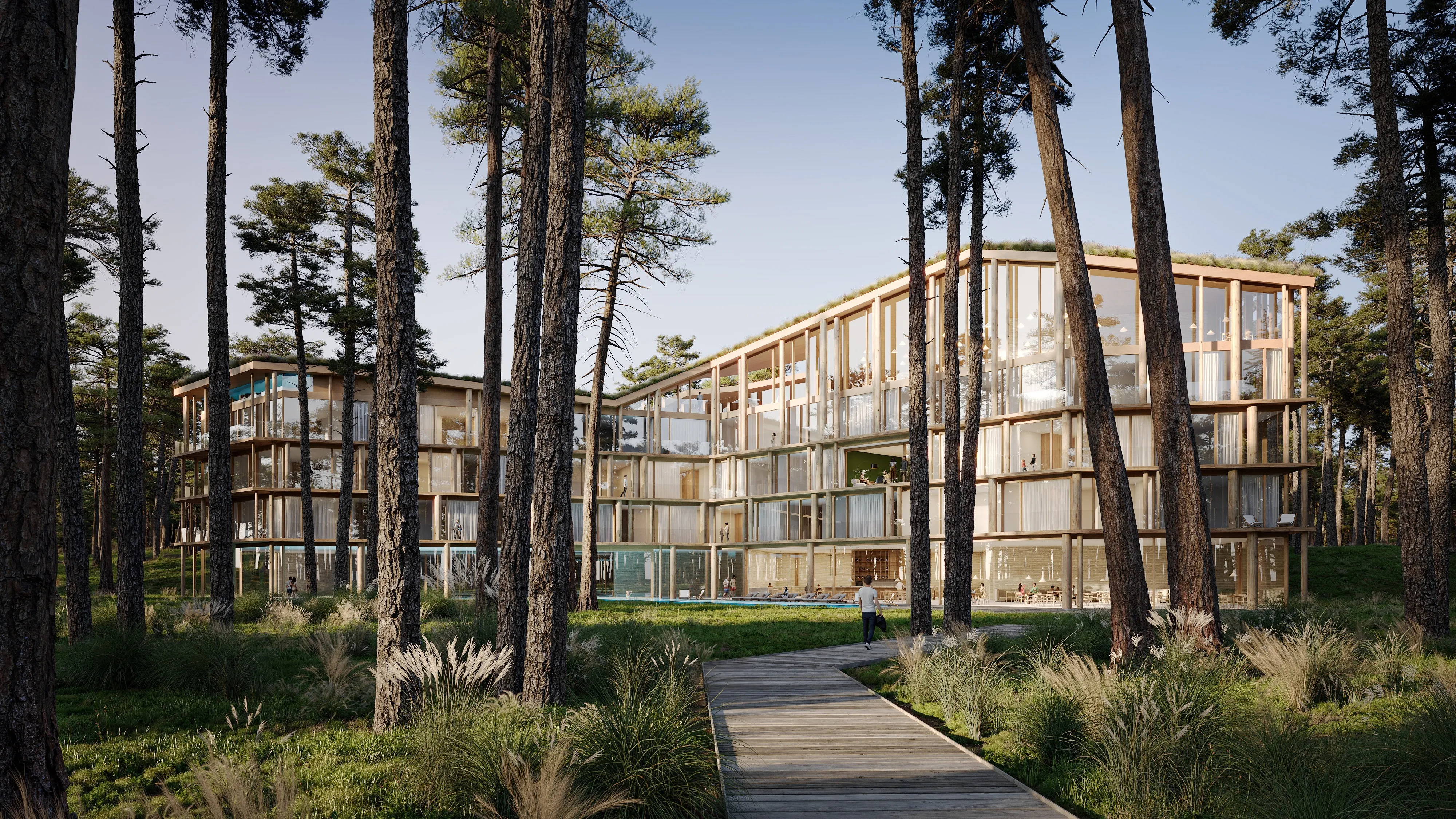
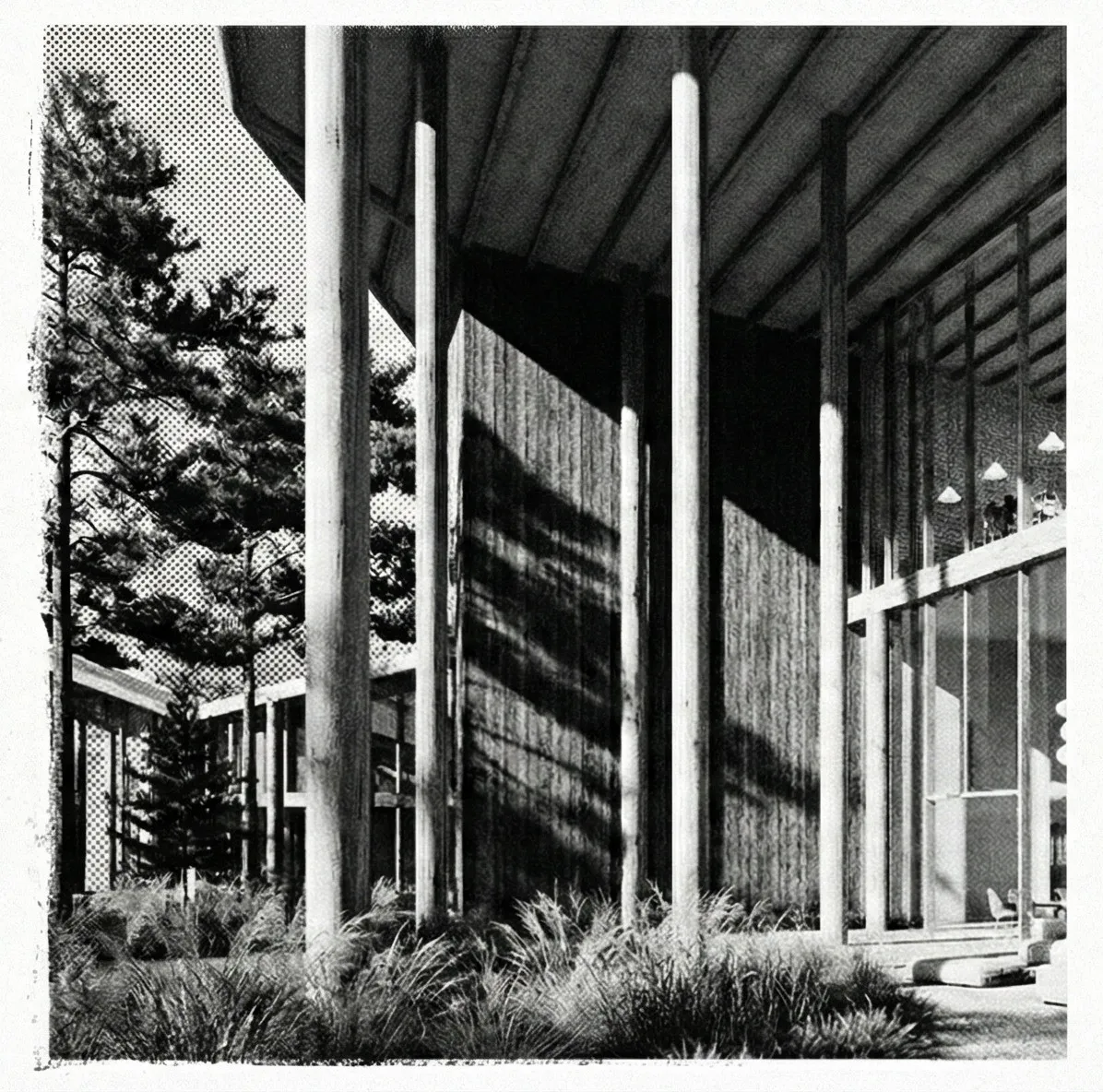
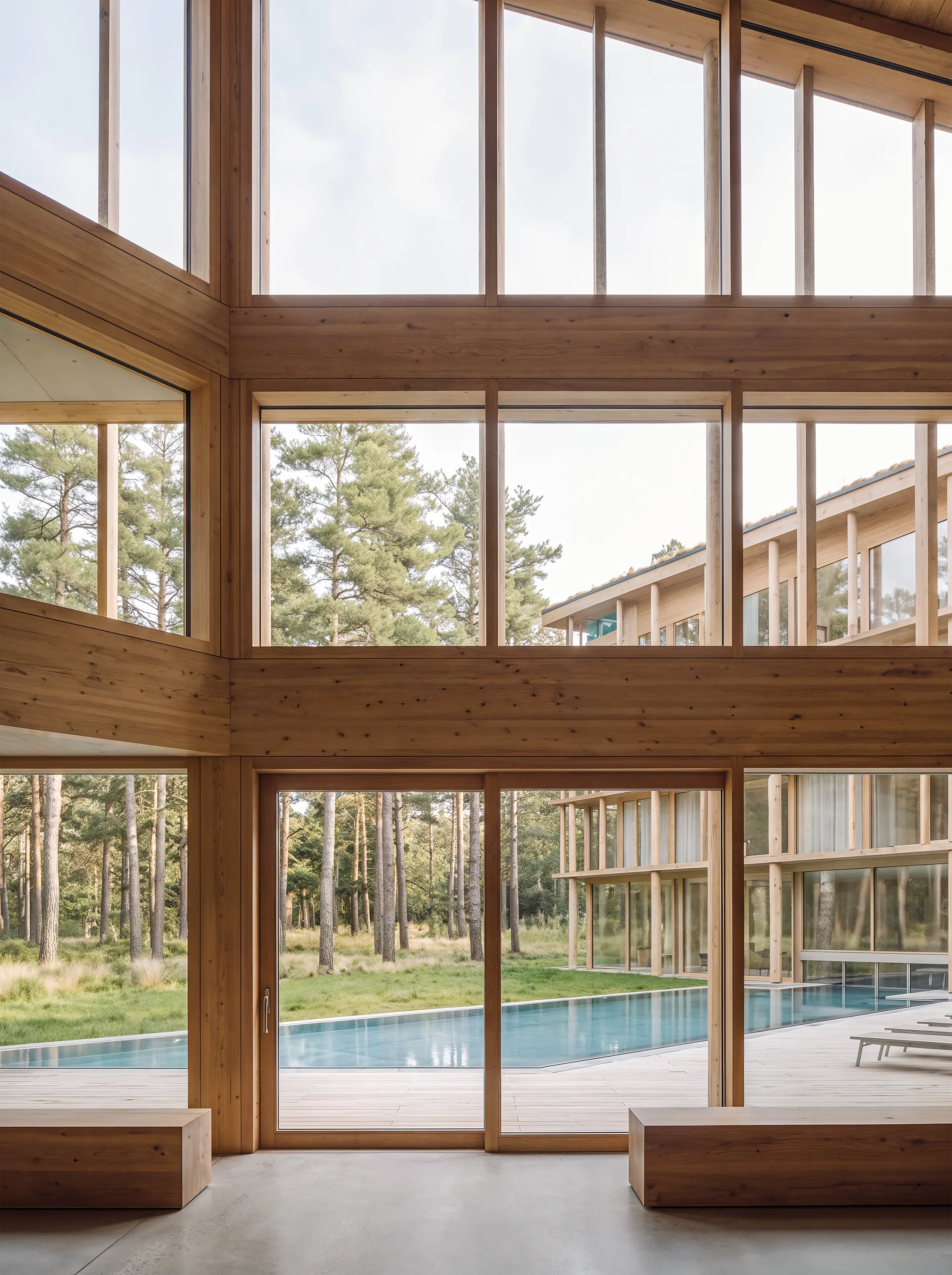
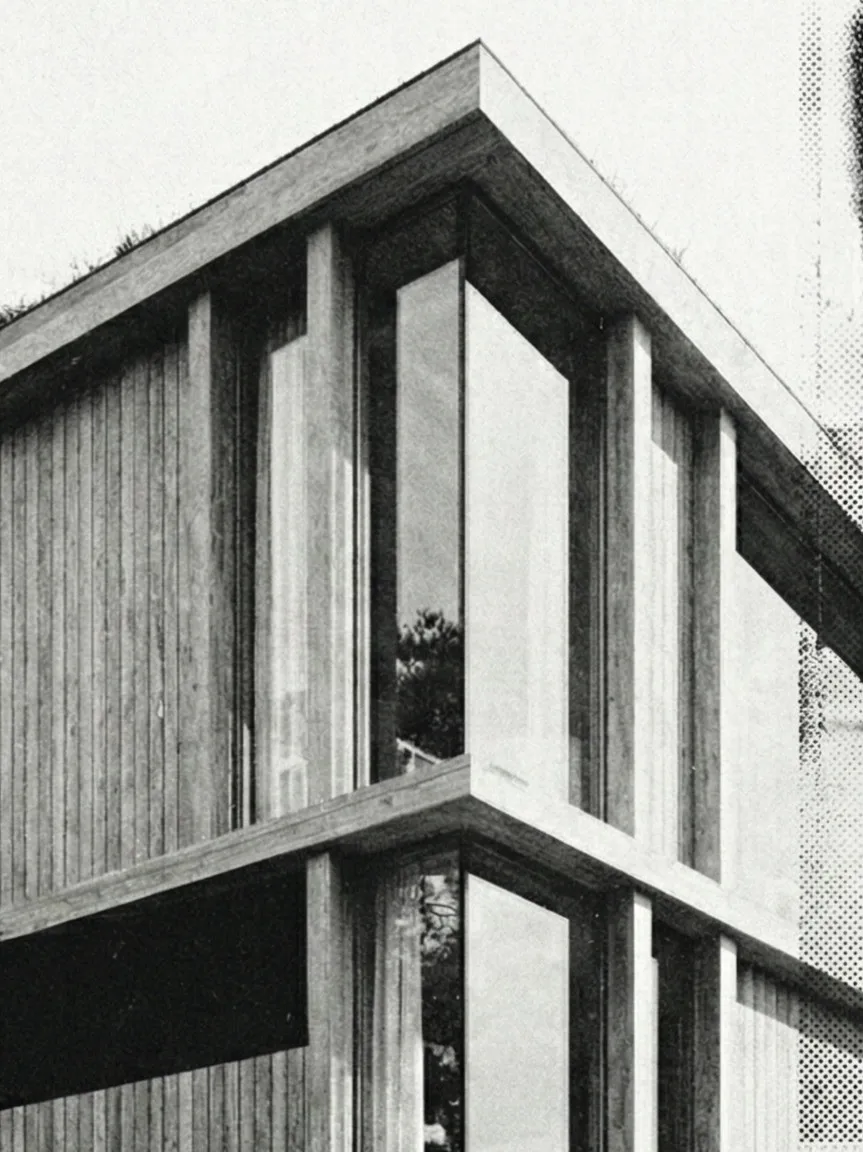
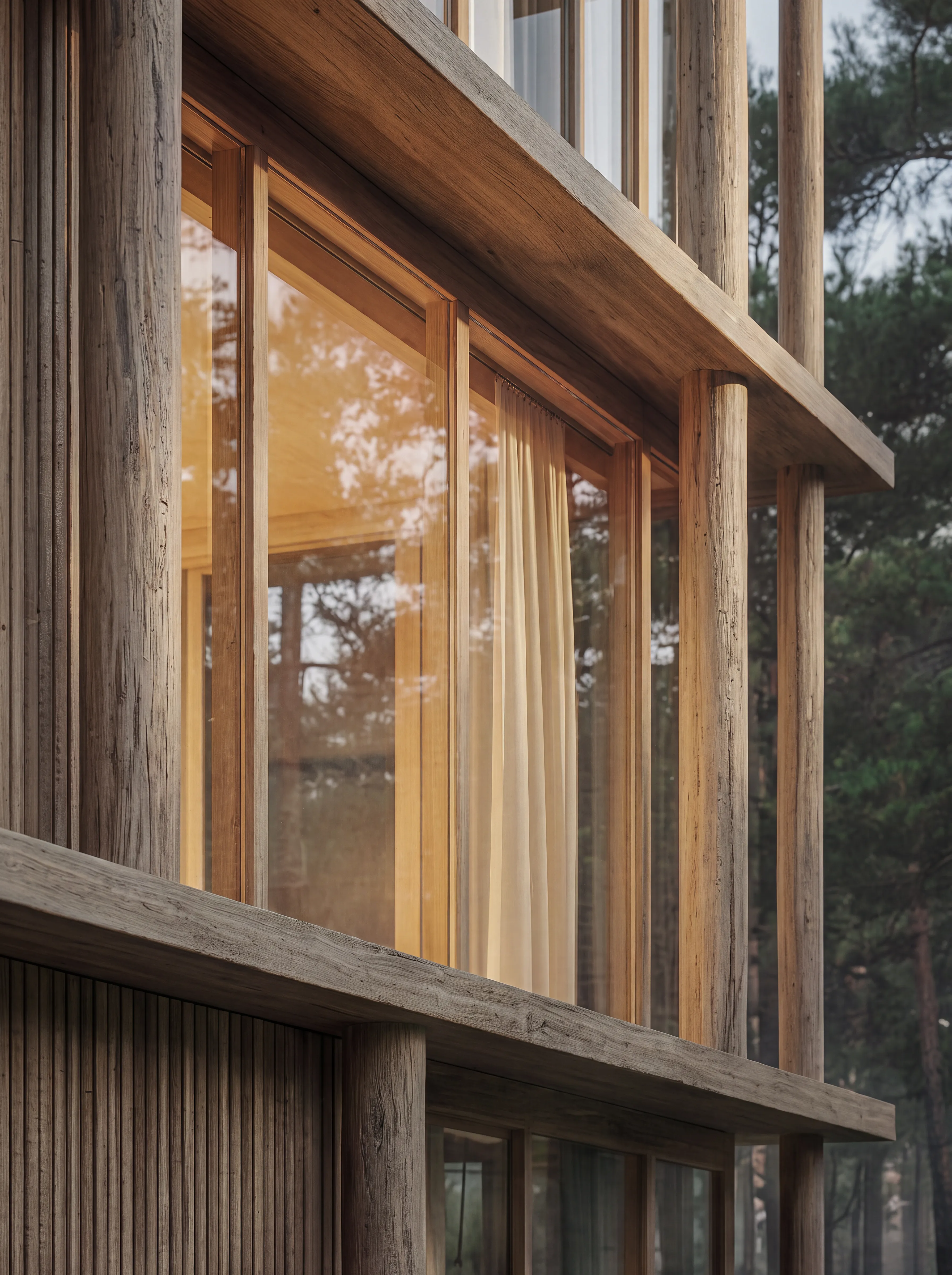
This competition entry for wolff:architekten and Sigurd Larsen belongs to that same story. It sits among the pine forests and lakes that surround Berlin where the trunks grow tall and straight and close together, and the architecture answers them in their own language with timber columns that rise the full height of each building and lift its terraces and its roofs into the canopy.
The camera walks slowly between the trunks the way a person would on an unhurried path, past ferns and soft grass and the long shadows that stretch across the forest floor, and somewhere along the way without any announcement the timber columns of the building begin to stand among the trees as if they had always grown there. Nobody points them out and the film never stops to explain them, because by the time the house appears it already feels like part of the forest that was simply waiting to be found.
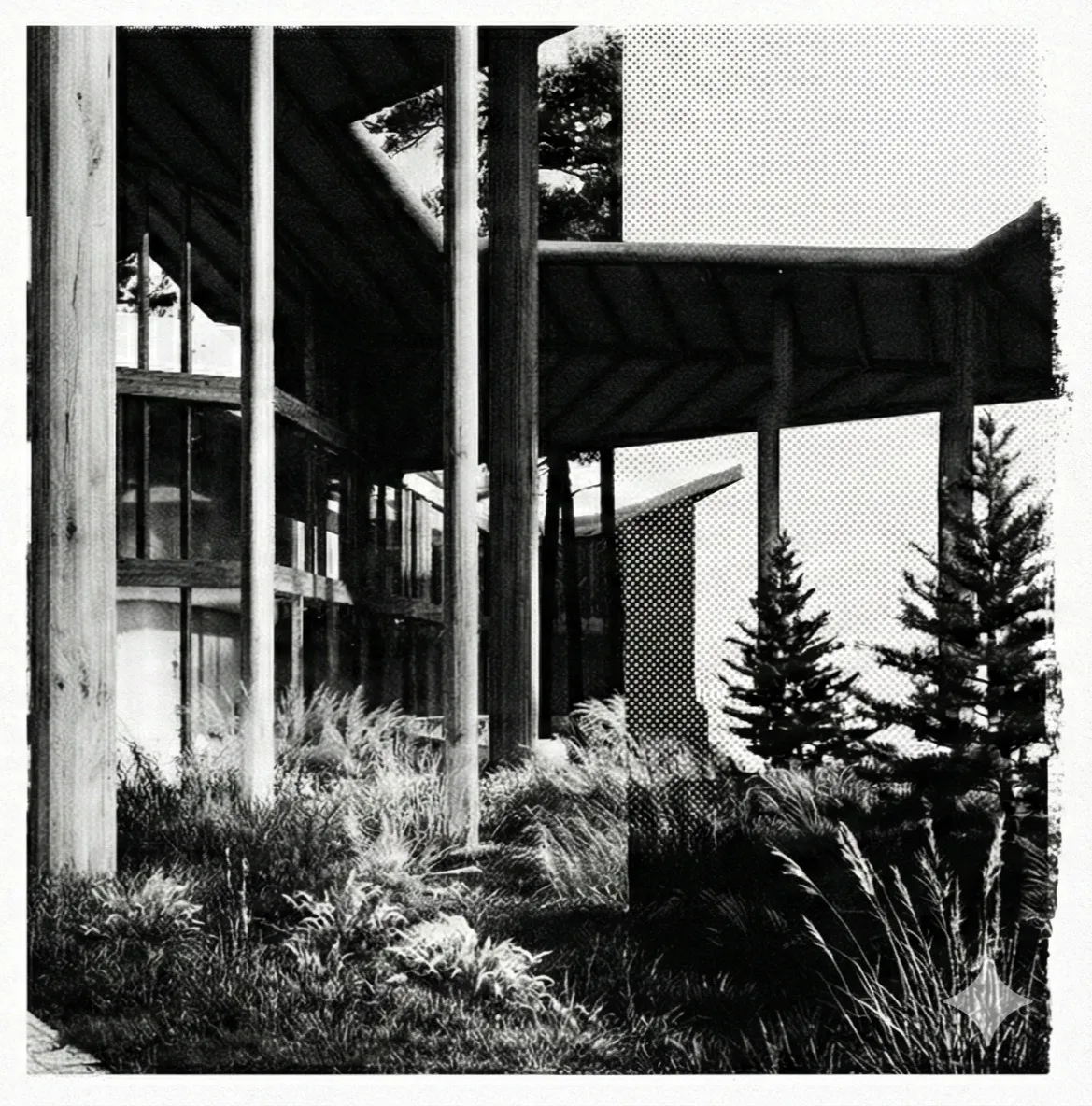
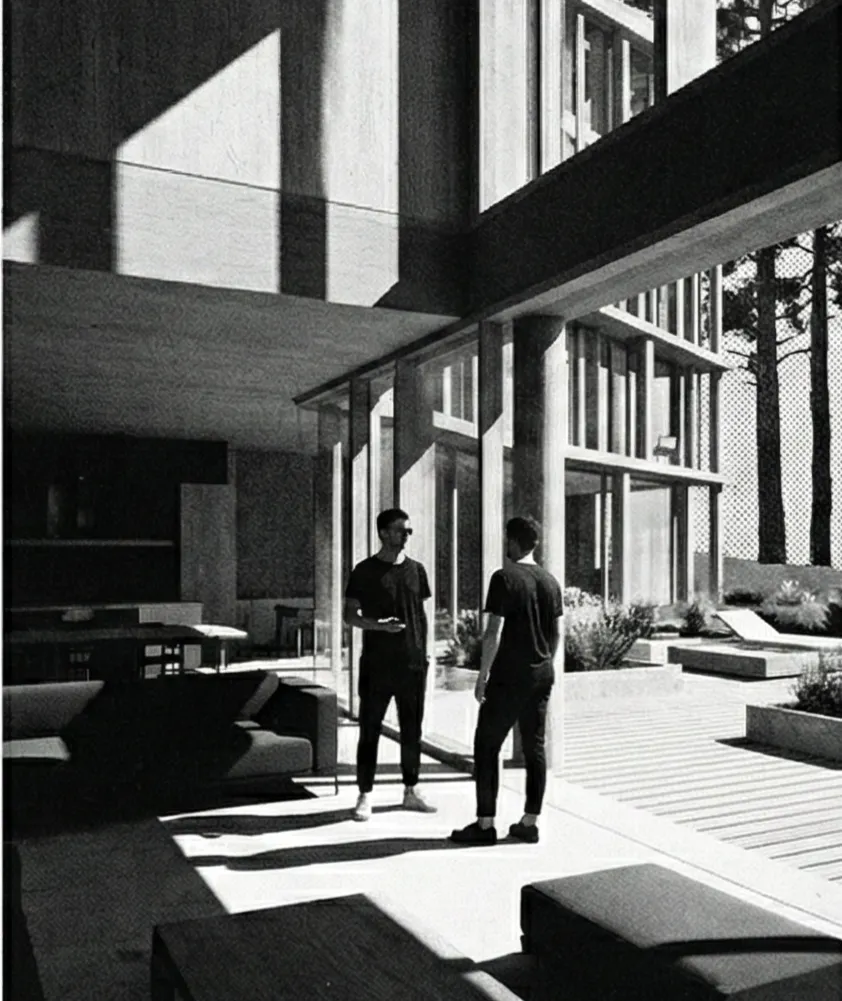
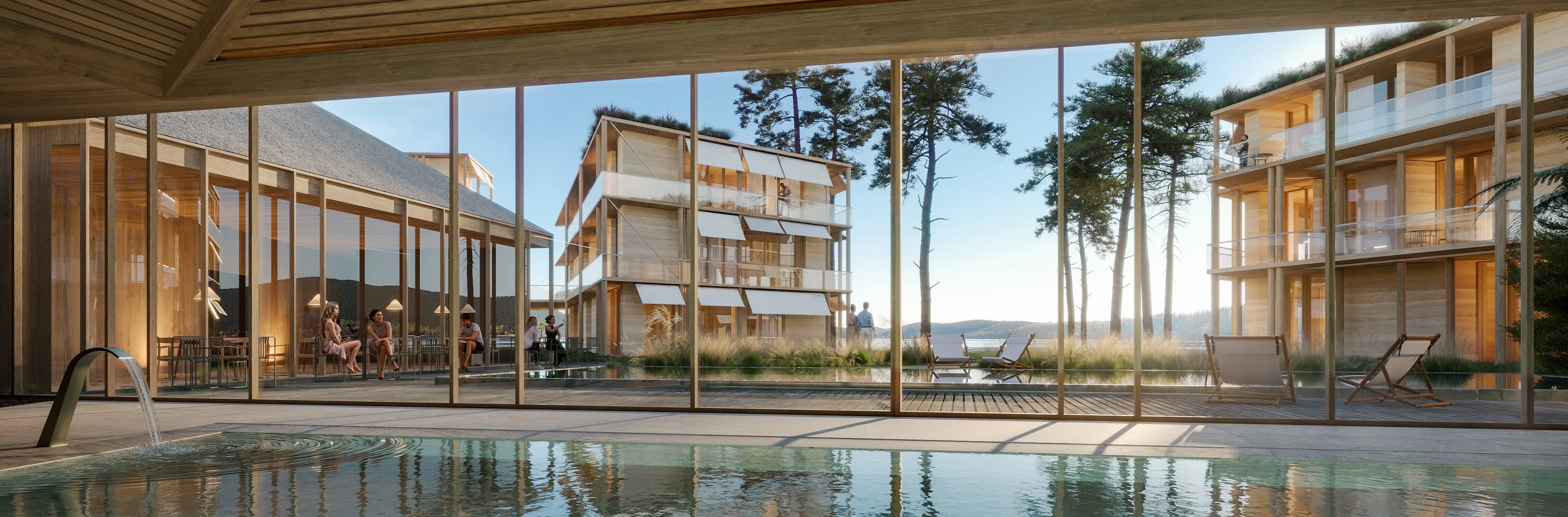
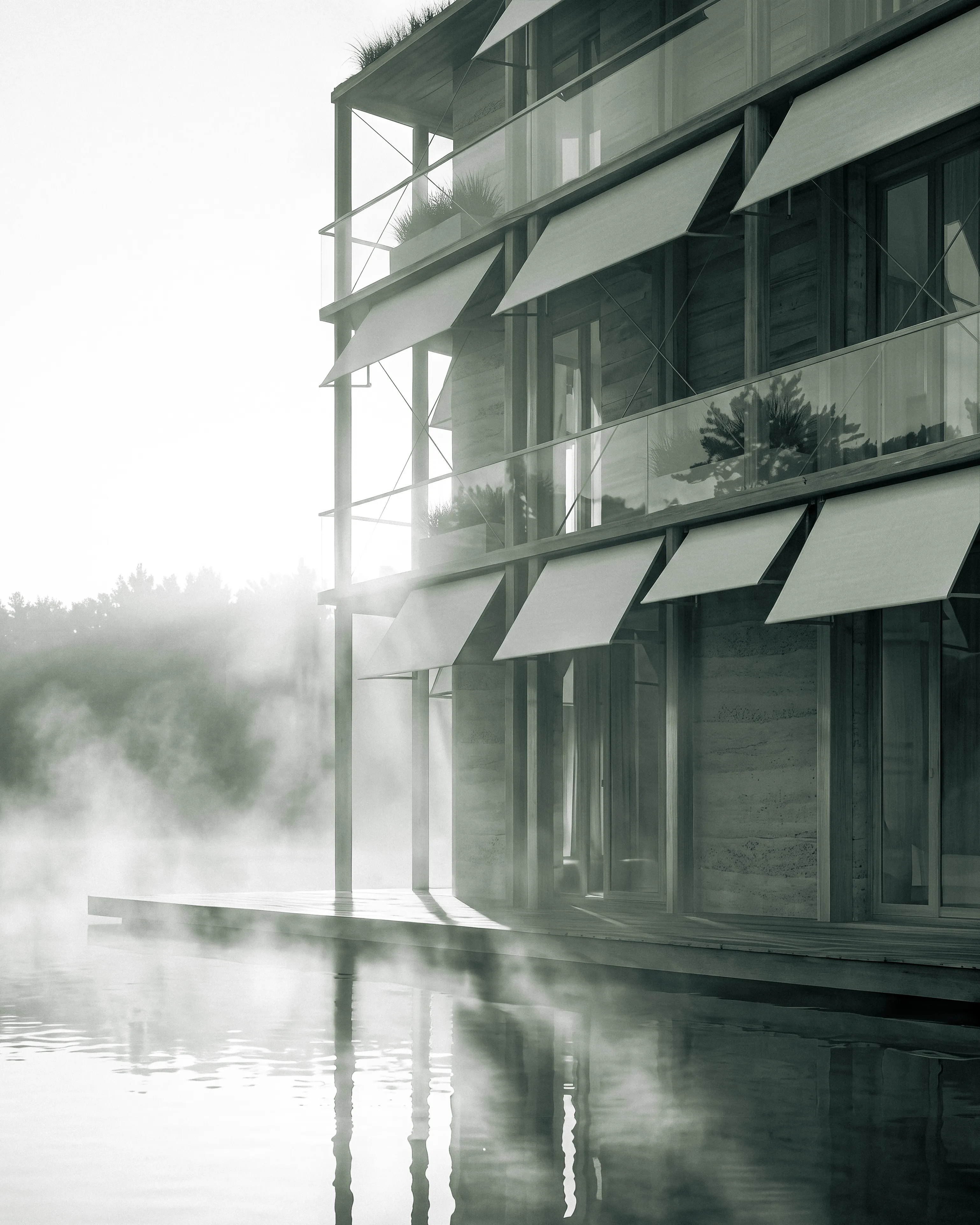
Our own images hold the colour of a morning in Brandenburg when mist lifts from the lake and a figure stands quietly at the edge of the water, or of an afternoon when the low sun moves through the pines and someone sits on a timber bench at the foot of the trunks with nowhere else to be. Inside the pool hall the roof rests on columns as tall as the trees beyond the glass and the still water holds the reflection of both until it becomes difficult to say which is which.
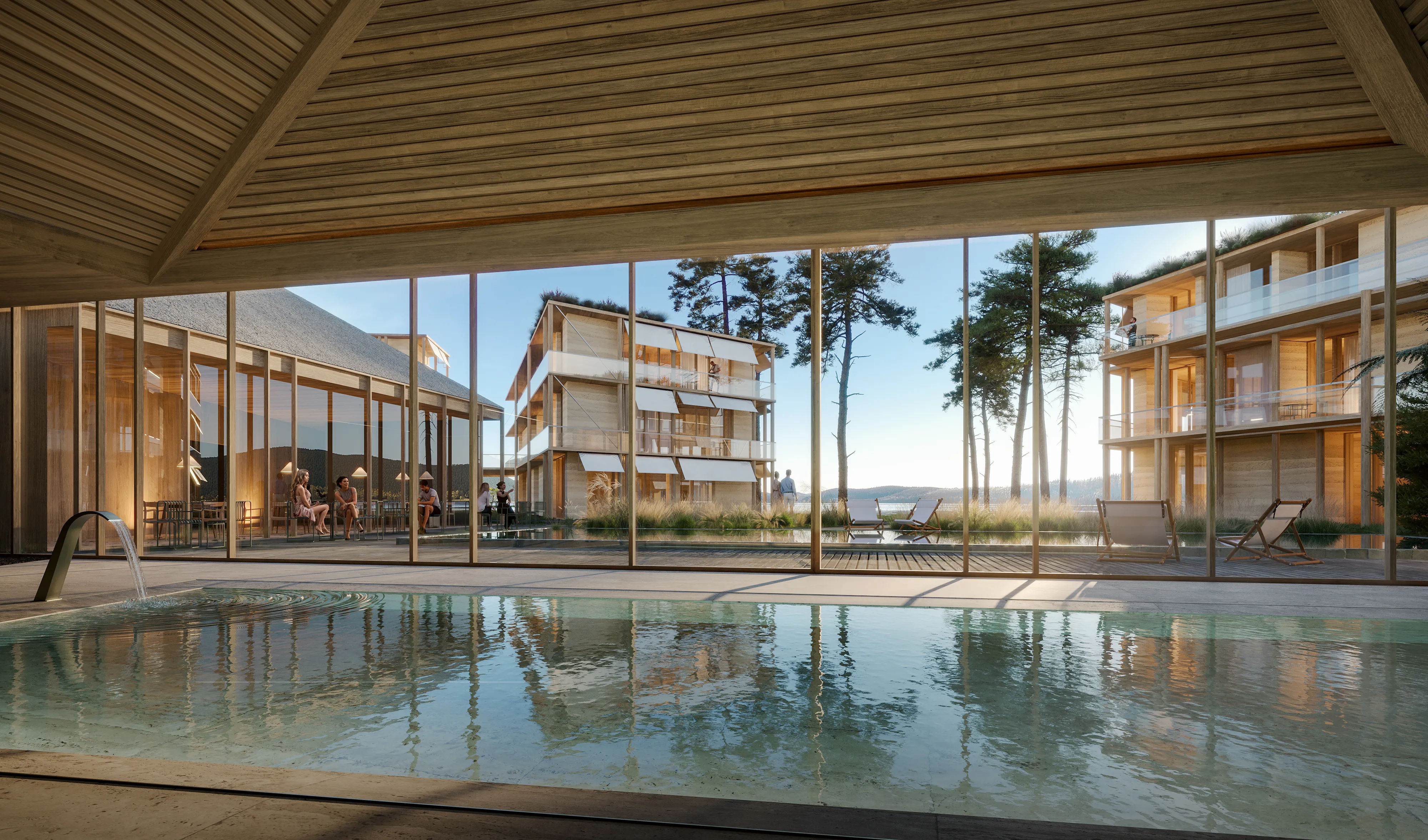
This is a building that does not ask the forest to make room for it. It is the forest continuing in another material and the place where the trees learned to hold a roof.